Friday, December 12, 2008

Bayside


From smaller club shows to packed Warped Tour sets, Bayside cultivates a relationship with the audience it has come to seductively serenade. The new album, Shudder, was recorded with the live show in mind. The members don’t shy away from mingling with the crowds at shows or being available by their merch setup for photos and conversations. They even maintain an active presence on their MySpace: reading and responding to the messages that pour in to their electronic home on the web. Bayside is nothing short than interactive and they take care to nurture the relationship with their fans; a relationship that uses music as a positive influence.
The band members draw on each other’s creativity to be inspired and influenced during the writing processes. Nick Ghanbarian, the bassist for the band says that he is “just really influenced by the people in [his] band at this point.” Those people would be Anthony Raneri, fronting the band as lead vocalist and rhythm guitarist; Jack O’Shea standing his ground on lead guitar and the occasional back-up vocals; and Chris Guglielmo keeping the beat on drums. Aside from his makeshift musical family, Nick receives his inspiration from “people that make [him] want to be creative on a daily basis. Musician-wise that would be people like Ben Folds or Jenny Lewis.”
Music is something that Nick had to find on his own rather than through his parents or friends - the mainstream point for one’s musical exploration: either from records strewn about the house or from a mix tape that a friend slipped in your hand between classes. So Nick found music on his own. At the age of thirteen and fourteen the bands that were pounding their tunes into his eager ears included Green Day, Bad Religion, and other bands exploding the airwaves at that point in time. It was this music that convinced the youngster that picking up an instrument was a necessary action. At first, Nick found that “at a younger age it alienated me until [he] found the local scene, but ever since then it’s just made [him] an open minded person and very creative at all points of the day.” His interest in music didn’t marginalize him for long and became his “motivation to basically get up every day and try to accomplish something. Using music as a positive influence is something awesome. It could be background music to you or it can be something that you live and die by…But to find music that really speaks to you and is a part of your everyday life is the best part about it.”
So much of today’s music that kids are gathering to listen to lacks depth and simply hides behind “the guise of a scene band because that is what has become popular over the years.” Whether the bands are put together by major labels or the members are brought together looking for fame and popularity, they lack the skills and drive to write their own music. “It’s unfortunate but you kind of have to take it for what it’s worth. People are living and dying by Boys Like Girls lyrics and that’s unfortunate, but at the same time there are real bands out there.” Bayside, not surprisingly, is one of those real bands. One that takes the time to make meaningful music incorporating lyrics that they can actually relate to and that they hope their audience can relate to as well. It’s a conscious effort to be a real band, to be “Bad Religion rather than the aforementioned band.” One that pays off as other bands burn out and fade away, leaving Bayside still hosting massive sing-alongs at venues across the map.
The songs start with Anthony, who is the primary songwriter in the band. His melodic mind, acoustic guitar, and Garageband - equipped Apple computer lays the skeletal spine of the song and then the song is “actually talked about a lot, if not more than [Bayside] actually plays the song.” This latest record was always in the works beforehand, but the band as a whole didn’t get together to review and fully form the pieces until six weeks before heading to the studio. “A week to ten days of pre-production and six weeks in LA to record everything” and the result is a record with which the band feels content. Nick says proudly that the guys are “happy with every part on the record, which is a first time… And the performances on the album are really something; they’re not too far off from a live.” The energy that is present in a live show is present on the album. The audience has no time to wonder what has happened to the band between the steps from studio to stage; they are too enraptured by the charismatic presence that is Bayside.
The result being a band that hits the road day after day, week after week, month after month, connecting with their fans and giving them the gift of music with heart. Bayside and company give up seeing their homes, their families, their significant others to “play shows and meet people.” They want you to say hello. They want you to take a picture with them. They want you to be involved. Don’t let them down.

The Human Abstract


After seeing these guys play day after day on the Warped Tour, heading to one of their club shows was an interesting experience. The Human Abstract deservingly scored a spot on tour with Japanese superstars, Dir En Grey, gaining them the undivided attention of J-rock fans across the nation. The band certainly didn’t disappoint me or the other members of the audience. The vocals are smooth and, whether crooning or screaming, the listener is captivated. Like the spider’s elegant, knowing legs the fingers of the guitarists travel up and down the neck of their instruments. The drummer keeps the cadence, flailing rhythmically in the background creating yet another titillating visual element. And the bassist doesn’t just pound away but intertwines overhand playing with vicious scales. Interviewing Nathan Ells, the voice of the band, was difficult as we moved from one supposedly quiet corner of the venue to another to escape from screaming Dir En Grey fans and members as the headliner finished up their night’s set. But after Nathan finished a drink at the bar, found a ledge in the entryway, and started to get into the in’s and out’s of the band - The Human Abstract, that is: things ran smoothly.
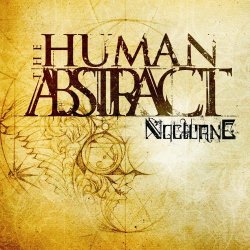
The basis of the band’s name comes from a William Blake poem which touches on the animalistic nature and instincts of man, and is just as profound as the music that is heard on the three albums released since the inception of the band in 2004. With a self-titled EP released in 2005, the full length Nocturne birthed in 2006, and the latest album to hit shelves, Midheaven, The Human Abstract has musically proven themselves with each endeavor they undertake – whether on tour, in studio, or a prosaic daily live show.
Nathan joined the band roughly seven or eight months after the band had formed on a tip from a mutual friend, Barry, who plays in a band called Look What I Did. The current line-up of The Human Abstract wasn’t working out as “they were having trouble with their singer…who was a raging alcoholic.” And Nathan, looking for a band at the time, gladly stepped up to the position – but he “drinks a lot too.” No one trying to feign innocence here. His vocal influences include such greats as Mike Patton and Maynard: standard icons in the world of rock vocals. Nathan is working on a joke for when he meets Maynard because “joking on famous people is the best way to meet them.” Take Dennis from the Refused for instance. When Nathan met him, at an International Noise Conspiracy show in Atlanta, taking him a Refused album to sign (ever so slightly gauche) he asked if he “was in the Illuminati and he froze. It was short circuit time.” Nathan had caught him by the tongue at an inopportune time and, after letting the musician conversationally flail for a long moment, he put him at ease by saying, “No it’s cool. I know you’re a communist.” The meet-and-greet ended well and Nathan was even provided with Dennis’ friend’s anti-Illuminati site. Not too shabby.
Life influences the songs that Nathan writes. Life and “writing in general.” For when he’s not “doing stuff with the band [he’s] writing” whether in the studio, in from of the microphone, or wherever the mood strikes. It’s actually an effort to “go out and hang out” but when you are in clubs and shows constantly, it’s not too appealing to go to clubs and shows on your day off. Bit of an occupational hazard. There really isn’t a process to the song writing. “It’s all about not worrying about writer’s block. The melody comes first and the words come after that.” This is the process that has produced such songs as the singer’s favorite, “A Dead World at Sunrise”, the chosen set-opener for the Dir En Grey tour: an ironically appropriate choice. This way the set starts off rather quietly – just a keyboard and vocals, stripped down, and surprisingly intimate for a metal show. It gets everyone’s attention and an anticipatory calm settles over the crowd.
It won’t be the choice for the upcoming As I Lay Dying tour this winter. Just expect brutal. And expect to be bewitched by whatever the Human Abstract offers – there’s nothing they can’t pull off. From Warped Tour to a small stage, the performance is always a musical masterpiece.

Tuesday, December 9, 2008

cold company and warm rooms

and sometimes the room might be warm.
but the company cold.
it is all a toss up
and it's all fairly unpredictable.
there are certain sources of comfort that might seem surprising.
and only happen once in a while...
but that once in a while happens more often than not
odd timing.
but i'm not complaining.
what you are not looking for is usually what you need
and it is usually right under your nose.
if you take the time to notice and nurture it.
try it on for size.

Words are sometimes more than words. And songs are sometimes more than songs. Interviews turn into conversations and conversations turn into inspiration. After watching Tim Barry’s set at the Revival Tour, I waited on the sidelines until Tim was ready for the interview. Nothing was rushed: a cigarette was shared and an interest in existence was pondered. We picked apart my questions and talked about what made them good questions and what made them worthwhile. It is a lovely thing to interact with an individual, as actual human beings, rather than as two parasites hoping to gain something from the others’ existence. The music industry can be sadly two-faced and false, but the Revival tour brought back some of the honesty: musically, personally, and emotionally.
After being ushered onto Tim’s bus, a temporary home on wheels while bringing music to the masses, the questioning began. I am quickly put at ease and made comfortable in my surroundings, though a little cold in the Seattle night. The songs that you find on Tim’s records, both Rivanna Junction and Manchester, were not written so much as they took residence rattling their melodies inside the musician’s head. They are created while Tim walks his dog Emma and “about twice a week something shows up…there’s a cadence to your walk depending on the day…[the songs] are almost like journal entries or a therapy session.” A rather serendipitous birth to the songs that Tim brings to the stage. The song “Dog Bumped” with the opening lines “one quick minute got me twenty eight long years” hit him “like a hollow point bullet right in the fucking brain…it was done before it was even started.” Technically, a fairly simple process. But they compliment the simplistic lifestyle that Tim has adopted living “in a little shed with no running water and no air-conditioning.” He refuses to listen to the people that say he is “stupid and crazy” because it is where he finds himself to be “most comfortable and most focused.”
But being comfortable behind an acoustic guitar wasn’t always the case. It was in 2003 when a left-wing magazine based in Ashville, North Carolina asked Tim, first having inquired as to the possibility of Avail playing, to come down and play a benefit show to keep the magazine on its feet. He acquiesced to the request with ten songs under his belt that he could play. And he took the stage and “the challenge was real…[he] was shaking while playing the guitar.” “At thirty seven years old, it’s nice to be scared.” Through the nerves and the apprehension, Tim decided that being frightened felt good and so he went to Europe “to figure out how to do this in front of the Germans because it’s easier than doing it in front of friends.” After the tour dates in Europe, the stage with just him and his acoustic guitar wasn’t so daunting, even though he “was still a terrible guitar player.” It was all about being comfortable with the challenge and sitting down and saying “oh word, I’m going to pick up an acoustic guitar.” Facing challenges head-on leaves you with no regrets and nothing to be reconsidered repeatedly. And Tim has “no regrets as a person. Period.”
To have the connection between punk music and folk music, “the same fucking three chords”, be directly met in the music of Tim Barry is “pretty simple.” During Avail shows Tim says he feels like “some machismo craphead and kind of empty in the end, but with [the acoustic] shows I feel challenged…this is all I got. I’m going to tell you straight up: fuck with me and I’ll fight you. Love on me and I’ll love on you. That’s just what’s up. I will sing you everything I got and I don’t have much else.” So take it. And find a peace of mind or the pieces…whatever is left.
Living day by day is, in itself, a great achievement. And living as Tim does and “keeping everyone in consideration” is an even greater achievement. One of his closest friends and his mentor, is Weasel. A man whose values mirror those of Tim’s. “Living simply” in his early seventies, Weasel “takes care of his own. He’s caring. He’s giving. Anyone who needs anything he’s the first one there. Anyone that wants to throwdown a fight he’s the first one to back them. Anyone who just wants to get drunk and rowdy he’s the first person that’s throwing down.” No matter the situation, Weasel arrives with a solution and that’s Tim’s mentor, the kind of person he looks up to: “those that are seventy-two years old and vegan and showing [him] pictures of his wife and children getting arrested at anti-war protests…those that don’t have a ton of money but still live simply.” Simply. But profoundly.
Aside from music, Tim leads a real life. He doesn’t preach the same lines about music being his life and all that matters to him. And he lists what makes up his sense of self and the man that he is: his family, the river, his house, a couple close friends, riding freight trains, painting, aerosol art, marking freight trains. And then he stops: “You think I’m crazy don’t you?” And I don’t. I don’t in the least.

Sunday, November 9, 2008

thoughts and gestures

neon lights and plastic emotions
a paved street of confusion
fall down the forty-four floors
to find your peace of mind - or the pieces
whatever is left after your wreck of a life
perhaps death is our final act of a life not lived
our brains giving up on finding any sort of meaning
our organs failing at pumping our rich blood into the veins of society's lay-abouts
our eyes tired of searching for a new direction or adventure and only finding a one-way street
our lungs tired of breathing the same stale air of failed desires
so we rest in a dark alley way filled with the destitute and emotionally penniless
mothers and fathers, brothers and sister, whores and carpenters, and candlestick makers...all curled up in the safety of a fetal position and inhaling the smoke of human waste and pollution
light the match and burn the imaginations of a thousand
a mission
a lifetime of murdered
of forgotten children

Sunday, October 26, 2008

valencia - do you believe?


Valencia –interview with George (bassist) and Brendan (guitarist)
What is the basis of the band name? How did you settle on it?
George: I guess when we first got together. We were kind of trying to figure out what our band would be called. We were so used to being in those other bands that we were having trouble. We came across Valencia. We did a little search on the back-story of what it meant. There’s a lot of different cities named Valencia and like an orange that is named Valencia. But that story of Valencia in Spain suits our band. During the Golden era it went through a lot of progression and evolution and when all of our bands broke up we really clicked when we were writing songs and stuff. WE saw that story and thought it clicked with our band’s story.
Can you list some of your musical influences – both musical and otherwise?
Brendan: Well musically we are pretty eclectic. We all like different things. Specifically I like to listen to the Beatles. I like older stuff, specifically Neil Young and Bob Dylan. I think the same goes for George. But it’s different for other people. As far as non-musically, I think we take inspiration from our family and from our friends. People we love.
How has music been a part of your life? How has it been present?
Brendan: Music’s everywhere. You can’t go anywhere without hearing music. IN Highschool I was in jazz band. Just grew up listening to music my whole life.
George; I went to a Catholic school until I was fourteen and we used to have to go to mass once a month in school. But the songs were so much different than what I used to listen to. That’s when it hit me that music was a big deal. That it was really important. That’s where I took it from. After that it aws listening to my mom’s CDs.
What are your thoughts on the current music scene? How do you feel your band fits in?
Brendan: I don’t know. What we tried to do on this last record we tried to stray away from the current music scene which is going towards shit with auto-tune and no one is playing their instruments.
George: Everything is so cut and paste.
Brendan: We tried to be a real band and play real instruments. And write real songs. Wt don’t fit into it. It’s a good thing because we don’t want to.
Can you describe your songwriting process?
Brendan: It’s usually one of us coming up with an idea. We’ll be sitting at home or in the van with our acoustic guitar or our laptop. Record it real quick. Bring it to practice and flush out the idea. It’s kind of an organic process rather than one person coming up with everything.
George: Sometimes we’ll just be at practice and somebody will play something that just catches everybody’s ear. It changes for every song.
Do you have a favorite track from your material?
Brendan: A song called “Carry On” – the fifth song on our new record. It’s just a sense of accomplishment when we finished that song. Because we’ve never written a ballad song. I mean we have, but they all sucked and that was the first good one. So we’re pretty proud of it.
George: I’m pretty proud of the last song on our record. Because it sums up the record as a whole. If you listen to the whole thing from front to back, it’s telling a story. And that is the conclusion of it. Everything about that song from the lyrics to the structure of it – it’s a good way to go through everything for me.
What do you consider to be your greatest musical achievement thus far?
Brendan: This record.
George: Yeah, I think finishing this record.
Brendan: It was a long process. We recorded it once and then re-recorded it. It was just a long process. So finishing it was a big deal for us.
George: Everything about the finished product is crazy for everyone. I mean, we got to do things we never thought we’d do. We moved out to LA and recorded the album for like two months. Worked in a bunch of different studios with a bunch of different people. The finished product is something we were all stoked about.

silverstein - smiling in their sleep


Hailing from Burlington, Ontario, the five members of Silverstein have created a following of both youngsters and mature listeners who support them throughout their musical ventures. Shane Told, the band’s vocalist, was kind enough to sit down and chat with me during his tour with guests Escape the Fate, Alesana, and Chiodos. His lively and pleasant nature made for a smooth conversation.
What is the basis of the band name?
That was a long time ago now. I still remember though. It was the year 2000. We started playing music and it was a side project. So we didn’t really know if it was going to last. I didn’t really think it was going to be a serious band. Just something fun. Something different. Then finally we decided we would make a go of it and we would play a show. So we needed a name. It was one of those dumb moments where you are in the practice space and you are looking for some kind of inspiration. And a few weeks before I had picked up this book to sing out of and then one day I picked up a Shel Silverstein book and I started singing out of it. He had just died two months before and then to forward to two weeks before the show, I looked and saw this Silverstein book that I had been reading out of earlier. And I said, “What about Silverstein?” And they were all like, “Yeah, that’s a pretty good name I guess.” And we just went with it.
Who are your musical influences – both musically and otherwise?
Influences are a weird thing. I mean obviously there are musical influences, but we’re five people. So there are bands that inspire me, but they aren’t necessarily bands that inspire our band musically. The Get Up Kids were probably the reason we started Silverstein. Then there’s also like Mineral and Promise Ring. Personally, the Beatles were always a huge influence, too. Billy Joel…I always just liked really great songwriters.
Do you pull from other avenues of life?
I don’t know. Not really. A lot of my main influences are musical and a lot of that has to do with how people are and their ethics. Somebody like Fat Mike from NOFX. He’s always someone I looked up to because he is honest about what he does and what he stands for. Music industry wise, he’s not concerned with what people are going to say about him, so I’ve always looked up to him.
How has music been present in your life aside from the band aspect?
I’ve always been a fan of music. It’s always been something that has been in the background of everything I have ever done. Even when I was three years old I can remember listening to Michael Jackson and Kiss and those bands. Putting on their records and how I would hang out with my family those records were always on in the background. I just associated that music with a good time. It’s always been important to me. As I got older, I found that no matter what happened music was always there for me. Through the good times and the bad times, music will always be there. I think a lot of people that listen to our band feel that same way. Maybe that’s the reason there is a connection there.
What are your thoughts on the current music scene and how do you feel Silverstein fitting in?
I don’t know. If you had asked me that question a couple years ago I would have had a different answer. A lot of bands now are doing things differently than I grew up doing them. A lot of people are worried about their image and that is coming ahead of a lot of other factors in the music. Which is something that Silverstein never thought about until we were a big band. When we realized that some of these things were important. But we never really thought about what we were going to wear on stage or backdrops. IT’s kind of changing the face of it. Punk rock is less punk rock now – it’s more of a major label thing. It kind of bums me out in some ways, but you know whatever. I think musically a lot of bands have really stepped it up and progress – a lot of people can play now. But there is less focus on songwriting. I don’t know where we are viewed compared to these other bands that we sometimes tour with. It’s always hard to be on the inside looking out. I think in some ways we do things like them but ethics wise we’re quite a bit different.
Can you describe your songwriting process?
It’s different every time. I play guitar and write some of the songs all the way through myself and then show everyone the parts. Then other songs, we’ll get in the room and someone will come up with a riff and we’ll grow from there. Put words with it and write it that way.
Do you have a favorite track from your material? Either to play live or to listen to?
That’s hard, you know. It’s kind of like picking a favorite child. There are definitely one’s that I like less. I’m pretty happy with all of them. There are some that are more fun to play live than others, like “Smile in Your Sleep” and “My Heroine” are two that kids really go crazy for live, so those are fun to play.
What do you consider to be your greatest musical achievement thus far?
That’s a hard question. It’s not like I’m writing symphonies. When you’re writing a three in a half minute song, can that be a great musical achievement. Or is a great musical achievement doing an entire a tour. I guess it could be an album. It’s really hard to say. I wish I had a straight answer for that. I think a lot of it is the progression that we’ve made as musicians. Coming from eight years ago when we started the band to now. How much better of a band we are, how much better of a show we have. I think that would be our greatest music achievement – our live show.
How do you feel that your musical outlook has changed over the years of being a band and touring?
I think I have become a lot more open minded about music. When we first started the band, I was pretty much only listening to punk rock, double-time fast music. And then a friend of mine, this girl I liked, made me a mix tape with “emo” bands on it. Which I’m sure nowadays they wouldn’t be considered emo bands. Bands like I mentioned earlier: Promise Ring, Saves the Day, The Get-Up Kids. I listened to it over and over again. I was like this is not fast punk rock, but I like it just as much. And it touched me. I really wanted to explore more of that side of the punk rock scene. So I did. And over the last eight years…
[door opens to green room slowly.
Shane: That was weird. Me: Yeah, that was odd. Shane: Is this venue haunted? Lauren: I think I saw someone push the door open. Shane: Oh you saw someone? Sorry, I watched this show about ghosts and now I’m all freaked out. You know when you watch that late at night and then you go to bed afraid you are going to see something out the corner of your eye.
Shane gets up and closes door]
But anyway…I’ve grown a lot over the years. I used to hate bands with keyboards in them. Absolutely hated them. I don’t know why I felt that way, I guess it was my punk rock background. I always hated when bands would use dance music kind of tones and now I’m like way into that. I guess I’ve just gotten older and way more accepting.
Do you have a favorite aspect of tour?
Touring isn’t very much fun except for the show part. The level we’re at now with a bus and everything is a lot better. A lot more comfortable. And there’s a lot less to worry about. We get a good night’s sleep every night and don’t have to drive. Back in the day we slugged it out in the van for a long time. I don’t know how I got through a lot of those weeks and months of shows. But you know, if it weren’t for those shows. Having the worst day ever, you get up on stage and the kids are there and there are excited about what you do. That is inspiring and makes you able to go on. All the sacrifices you make and being away from home. Tour sucks, but playing the shows is good.
Regrets?
I think if you look back at anyone’s life, over the last eight years, they have things that they would do differently. Personally, looking back at my past relationships there are things that I would have done differently. I made mistakes of course. I definitely have regrets in that since. But musically I feel pretty confident with everything we’ve done. We’ve been lucky and we’ve had fun with it. But the main thing I try to do every day is to look ahead and not regret. You don’t want to be living in regret at any moment.
Any upcoming projects?
Well, we’re doing a new album. We’ve almost done it. We’ve written all the music. I’m starting to get my notebook ready. I’m writing down lyrics. We’re going to be recording that right after Thanksgiving. Hopefully that will be done by the end of January and will come out by April. The new stuff is coming out great; we’re becoming more open minded with our music. I think we’re going to be doing some things differently.
Final comments?
Thanks for the interview and your time and everything. Yeah.